vintage tin - history. facts. stories.
Vintage Tin
A place for classic car history, facts, memories, stories and the people behind the cars that make them special. Classic cars are about much more than the cars themselves. They are about the people who designed them, built them, owned them and the memories created along the way. Keep looking in from time to time. Vintage Tin will continue to grow, with more stories, memories and history being added along the way. If you have a memory, a story, a photograph or an idea, I would love to hear from you.
On This Day In Automotive History.
29th November 1975 - Graham Hill Died. Twice World Drivers Champion and one of Britain’s most popular sportsmen, was killed at the age of 46, along with 5 members of the Embassy Hill Grand Prix team, when the Piper PA 23-250 Turbo-Aztec light aircraft he was piloting crashed in freezing fog near Elstree Airport in Hertfordshire, England. 21st January 1964 - Paddy Hopkirk and co-driver Henry Liddon won The Monte Carlo Rally. No one expected him to win, not the competition, not the officials, and not even the driver himself. On 21 January 1964, Patrick “Paddy” Hopkirk and co driver Henry Liddon achieved one of motorsport’s greatest David versus Goliath victories by winning the Monte Carlo Rally. 6th June 1982 - Northern Ireland’s John Watson, driving a McLaren-Cosworth MP4/1B, started from seventeenth on the grid and produced a stunning charge through the field to win the first Detroit Grand Prix. It was his second victory of the season and kept him firmly in championship contention, but Keke Rosberg ultimately secured the 1982 World Championship with 44 points to Watson’s. June 16th 1903 - The Ford Motor Company was founded. The Ford Motor Company was founded by Henry Ford and incorporated in Michigan, US. The corporation’s common stock was entirely owned by Henry Ford and a small group of local investors. In 1919, Henry Ford bought out all of these investors and reincorporated the company in the State of Delaware. 23rd June 1902 - The “Mercedes” name was registered as a trademark by the Daimler Motorsen-Gesellschaft. 7th July 1977 - “The Spy Who Loved Me,” starring Roger Moore as the suave super spy James Bond, known for his love of fast cars and dangerous women, had its London premiere. The film features one of the most memorable Bond cars of all time, a sleek, powerful Lotus Esprit sports car that does double duty as a submarine. 23rd July 1888 - Scottish born John Boyd Dunlop developed the pneumatic tyre to improve his son’s bicycle and patented his design in 1888. Although Robert William Thomson had patented a similar idea for carriage wheels in 1845, it was largely forgotten due to a lack of demand. Dunlop’s version became commercially successful, leading to the formation of the Dunlop company in 1889, later becoming Dunlop Rubber Co in 1900. The first tyres were glued directly to the wheel rim. August 3rd 1900 - The Firestone Tire & Rubber Company was established in Akron, Ohio, US. Thirty-one-year-old inventor and entrepreneur Harvey S. Firestone seized on a new way of making carriage tires and began production with only 12 employees. August 9th 1901 - The Great 1,000 Mile Irish Tour was Ireland's first major automotive event when a small fleet of pioneer motorists left Dublin to circumnavigate Ireland over the course of a fortnight

Pros and Cons of Classic Car Ownership
There is something special about owning a classic car. Whether it brings back memories, fulfils a dream or simply puts a smile on your face, it’s an experience that modern cars rarely match. However, owning a classic is not always plain sailing. They have their quirks, demand a little more attention and occasionally test your patience. Of course, these are just some of the more common pros and cons and every owner's experience will be different. The Pros. •They turn ordinary journeys into fun and memorable experiences. •They attract smiles, waves and conversations wherever you go. •They are simpler to understand and maintain than modern cars. •There is a wonderful sense of achievement in improving and caring for them yourself. •Owners clubs and groups are always willing to help. •Parts are surprisingly easy to obtain for most classics. The Cons. •Rust can be your worst enemy. •Unexpected repairs are part of classic car ownership. •Insurance, storage and maintenance all add to the overall cost. •If you can't carry out your own repairs, finding a garage, or or someone who can, may be a challenge. •They occasionally have a habit of testing your patience at the most inconvenient moments! Final Thoughts. Owning a Classic Car is not for everyone, and that's perfectly fine. But if you enjoy getting involved, appreciate older engineering and can accept the occasional challenge, the rewards far outweigh the drawbacks.
The Day Formula One Turned Around
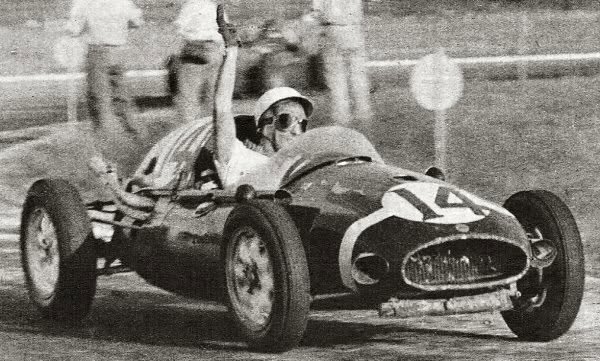
Stirling Moss and the Little Cooper That Changed Racing For much of motor racing’s early history, the accepted formula was simple: the engine went in the front, the driver sat behind it, and the rear wheels provided the power. This was the layout used by the great racing machines of the pre-war and early post-war era. Ferrari, Maserati and other famous manufacturers built powerful front-engined cars with large engines and impressive straight-line speed. Then came a small British racing car that challenged everything people thought they knew. The Cooper T43 looked almost unconventional. Instead of placing the engine in front of the driver, John and Charles Cooper placed it behind him. At first, many considered the idea unsuitable for serious Grand Prix racing. A racing car was supposed to have a long bonnet, a powerful engine at the front and the appearance of a traditional racing machine. The Cooper had none of those things. But what it lacked in size and power, it made up for in intelligence. With the engine behind the driver, the car had better weight distribution, improved handling and could carry more speed through corners. It was lighter, easier on its tyres and far more agile than the larger front-engined cars. The first major proof came at the 1958 Argentine Grand Prix. Driving a Cooper T43-Climax entered by the private Rob Walker Racing Team, Stirling Moss achieved a landmark victory. The little British car defeated the more powerful opposition from Ferrari and Maserati, proving that clever design could overcome raw horsepower. It was a turning point. The message was clear: the future of racing cars was not necessarily about bigger engines and more power. The future belonged to better balance, lighter weight and smarter engineering. A year later, the importance of the rear-engined design was confirmed when Jack Brabham won the 1959 Formula One World Championship driving a Cooper, followed by another title in 1960. Within only a few years, almost every Formula One team had abandoned the traditional front-engined layout. The design that had once looked strange became the standard for Grand Prix racing and remains so today. The little Cooper had changed Formula One forever. It was another example of a lesson repeated throughout motoring history: the biggest revolutions do not always come from the biggest names or the most powerful machines. Sometimes they come from someone willing to challenge the way things have always been done.
Mini Moments - Harry Taylor
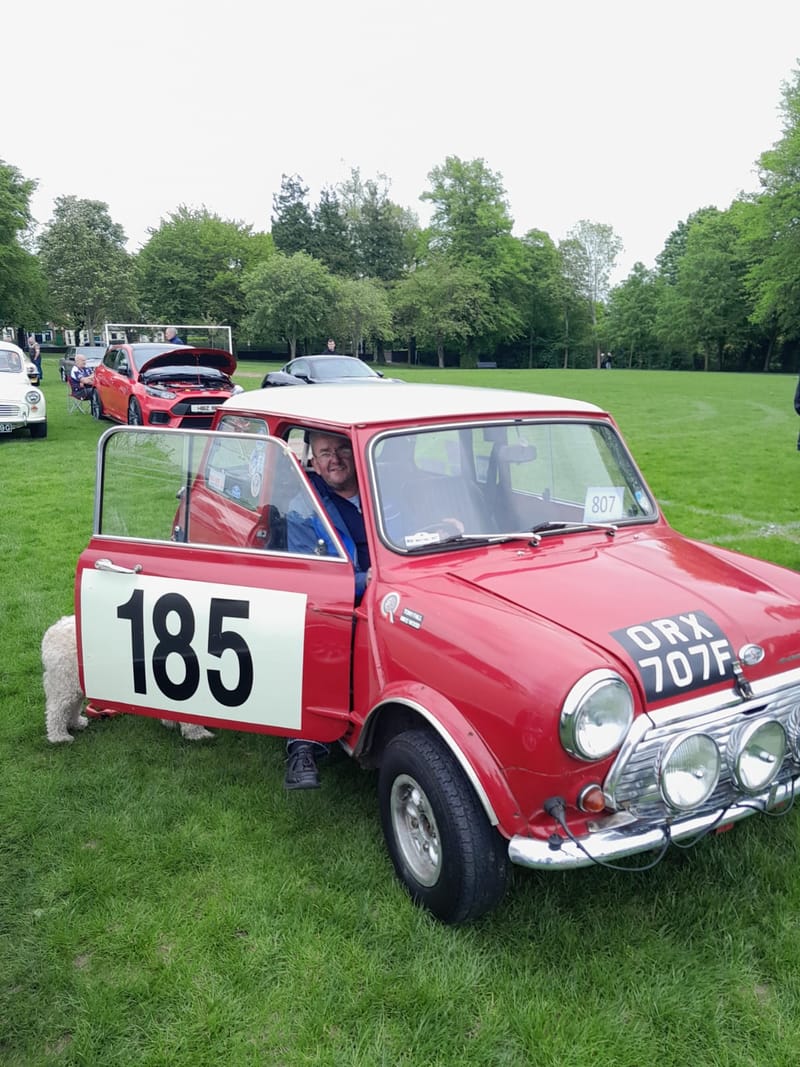
In the mid-1970s, while working at Charles Hurst, I bought an ex-works Mini Cooper S, ORX 707F. This wasn't just any Mini,it came from the same works team as Paddy Hopkirk's Monte Carlo-winning car. ORX had its own competition pedigree too, finishing 2nd in class and 4th overall in the 1967 Monte Carlo Rally. At 18, I dreamed of rallying it myself, but enthusiasm far outweighed both talent and budget. Two memorable incidents from my ownership have stayed with me. The first came during an attempt to recreate a night rally on quiet roads near Ballygowan. My complete lack of experience ended with ORX sliding into a ditch and finishing in a farmer's field. Thankfully, neither my navigator nor I was hurt. The farmer kindly pulled the Mini out with his tractor, and after a couple of weeks' repairs, ORX was back on the road. The second incident came during a local Boxing Day autotest, where I managed to shear the differential, leaving me with another repair bill I couldn't afford. Eventually, apprentice wages and motorsport simply didn't mix, so I reluctantly sold ORX. The car is still in Northern Ireland, and in a twist of fate, its current owner remembers visiting my house in the 1970s to buy a straight cut gearbox. He desperately wanted ORX too but couldn't afford it. Today, he owns the car, now worth over £100,000, well beyond my reach, although unlikely to ever come up for sal Looking back, selling ORX remains one of my biggest regrets. Photo - Me reunited with ORX in 2023
When Did The Classic Car Hobby Begin?
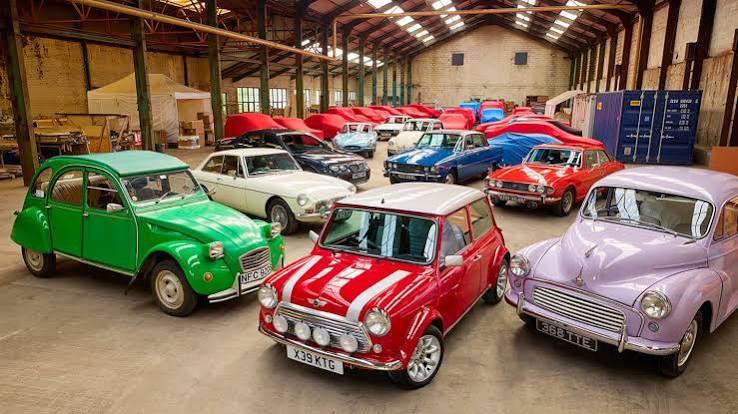
The term "Cassic Car" is something we hear every day, but when did the idea of owning, preserving and enjoying old cars actually begin? The earliest use of the word "classic" in relation to cars appears to date back to the 1930s and 1940s, when certain older and more prestigious cars were being recognised for their design, engineering and importance. However, the classic car movement as we know it today began to develop after the Second World War. Enthusiasts started preserving early cars that were becoming rare, while clubs, rallies and events brought owners together. Organisations such as the Veteran Car Club of Great Britain and the Vintage Sports Car Club helped establish the idea that older vehicles were worth saving, not just replacing. During the 1960s and 1970s, the hobby expanded further. Cars that had once been everyday transport began to be appreciated for their character and history. By the 1980s, the term "Classic Car" had become widely recognised, supported by specialist magazines, clubs, shows and auctions. Interestingly, many cars that we now consider classics were never regarded as special by most people when they were new. A Mini, an MGB, a Ford Escort or an ordinary family car was simply part of everyday life. However, for many of us, they were more than just transport. We chose cars because we liked them. They looked good, they made us feel good, and in some small way they reflected our personality. Maybe that was where the classic car hobby really began for many enthusiasts. We formed an attachment to certain cars long before they were considered classics, while others simply saw them as a way of getting from A to B. My own journey through those years included some memorable cars, from an ex works Mini Cooper S rally car in the 1970s, through to everyday favourites such as a Mini 1000, a Vauxhall Viva HB, a Fiat Mirafiori 131, an Escort XR3i, an Escort XR3i Convertible, a Mercedes 190, an old red Jag (can’t remember the model), and even an Escort van. It is only with the passing of time that we begin to appreciate the memories, the character and the history attached to them. Perhaps that is what makes a classic car more than just an old car. It is not simply the car itself, but the people, places and memories that travelled along with it.
Carl Benz and the Birth of the Automobile.
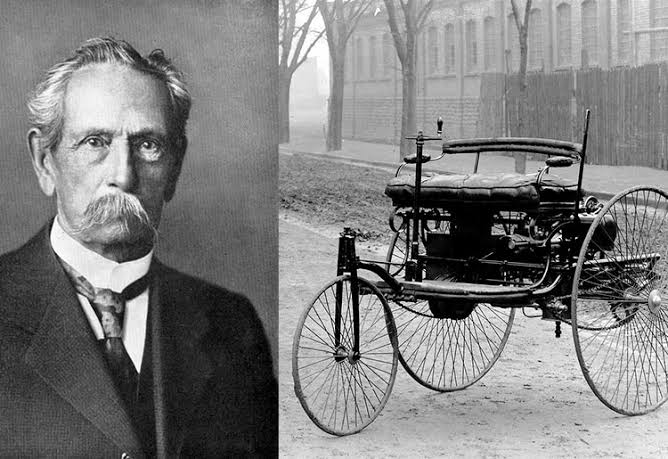
November 25, 1844 – Born Karl Friedrich Michael Vaillant in Karlsruhe, Germany, to Josephine Vaillant and Johann George Benz. 1846 – His father, a locomotive driver, dies of pneumonia. His mother legally changes the boy's name to Karl Friedrich Benz in his honour. 1853 – Enters the scientifically oriented Lyzeum in Karlsruhe at age nine. September 30, 1860 – Passes the entrance exam for mechanical engineering at the Karlsruhe Polytechnic at age 15. July 9, 1864 – Graduates from the Karlsruhe Polytechnic at age 19. 1864–1871 – Gains practical experience through various engineering jobs, including positions in Karlsruhe, Mannheim, Pforzheim, and Vienna. 1871 – Launches his first company, a mechanical workshop in Mannheim, with partner August Ritter. July 20, 1872 – Marries Bertha Ringer, who uses her dowry to buy out the share of his unreliable business partner, August Ritter. December 31, 1879 – Successfully runs his newly designed two-stroke internal combustion gas engine for the first time on New Year's Eve. 1882 – Organises a joint-stock company, Gasmotoren-Fabrik Mannheim, but leaves shortly after due to disagreements with the board regarding design directions. October 1883 – Founds Benz & Companie Rheinische Gasmotoren-Fabrik (Benz & Cie.) in Mannheim to produce static gas engines. 1885 – Builds the first Benz Patent Motorwagen, a three-wheeled vehicle featuring a lightweight four-stroke engine, electric ignition, differential gears, and surface carburettor. January 29, 1886 – Files German patent DRP No. 37435 for his gas-powered vehicle. This date is universally recognised as the official birth of the modern automobile. July 3, 1886 – Conducts the first public test drive of the Patent Motorwagen on the Ringstrasse in Mannheim. August 1888 – Bertha Benz, without her husband's prior knowledge, drives the Patent Motorwagen No. 3 with her two teenage sons from Mannheim to Pforzheim (approx. 100 kilometres), executing the first long-distance automobile road trip in history. 1888 – The Patent Motorwagen goes on sale commercially, making it the first commercially available automobile in history. 1889 – Showcases the Motorwagen at the Paris World Exposition, capturing global attention. 1893 – Invents the double-pivot steering system and introduces the Benz Victoria, his first four-wheeled car. 1894 – Launches the Benz Velo, the world's first mass-produced automobile. 1896 – Invents the contra engine (boxer engine), which features horizontally opposed pistons. This design remains fundamental to automotive engineering today. 1899 – Benz & Cie. becomes a joint-stock company and grows to be the largest automobile manufacturer in the world, employing 430 workers and producing 572 vehicles annually. 1903 – Retires from active design management at Benz & Cie. following internal company disagreements over importing French design elements. 1906 – Founds the family-owned company Carl Benz Söhne (Carl Benz & Sons) in Ladenburg alongside his sons, Eugen and Richard, to build automobiles. 1926 – Benz & Cie. merges with competitor Daimler-Motoren-Gesellschaft to form Daimler-Benz AG, uniting the legacies of Carl Benz and Gottlieb Daimler under the brand name Mercedes-Benz. Carl Benz joins the board of directors. April 4, 1929 – Passes away at the age of 84 at his home in Ladenburg, Germany, from a bronchial inflammation
Bonnie And Clyde / Henry Ford
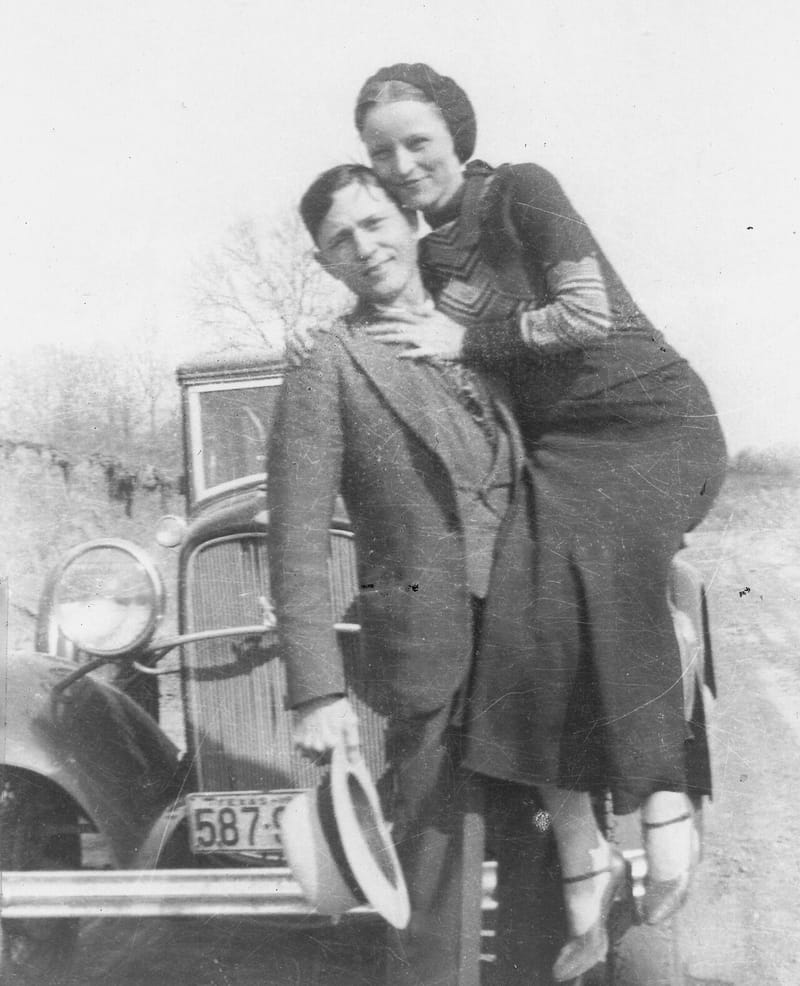
Clyde Barrow’s letter to Henry Ford is one of the most famous examples of a car earning a reputation far beyond its intended purpose. It came at a time when the Ford V8 had only recently transformed the affordable car market. In 1932, Ford Motor Company introduced its revolutionary flathead V8 engine. It was the first time a mass produced, relatively inexpensive car offered the power of a much larger and more expensive vehicle. With around 65 horsepower, the new Ford V8 was fast, dependable and affordable. For Clyde Barrow and his gang, those qualities made the Ford V8 the perfect getaway car. During the early 1930s, Bonnie and Clyde were being pursued across several American states after a series of robberies, and they discovered that many police cars simply could not match the performance of a Ford V8. In April 1934, shortly before the famous ambush that killed Bonnie and Clyde on 23 May 1934, Barrow wrote directly to Henry Ford praising the car. The letter was later reproduced by Ford publicity and became part of the legend surrounding the V8. The letter read: “Dear Sir: While I still have got breath in my lungs I want to tell you what a dandy car you make. I have drove Fords exclusively when I could get away with one. For sustained speed and freedom from trouble the Ford has got every other car skinned, and even if my business has not been strictly legal it don’t hurt anything to say what a fine car you have in the V8. Yours truly, Clyde Champion Barrow” The exact wording varies slightly between surviving versions, but the message is clear: Barrow was impressed by the performance of Ford’s new V8. The irony was not lost on Ford. The company had created a car designed for everyday Americans, but its combination of power, reliability and low cost also made it attractive to those trying to outrun the law. The story helped cement the Ford V8’s place in automotive history.
Finding The Right Car - Harry Taylor
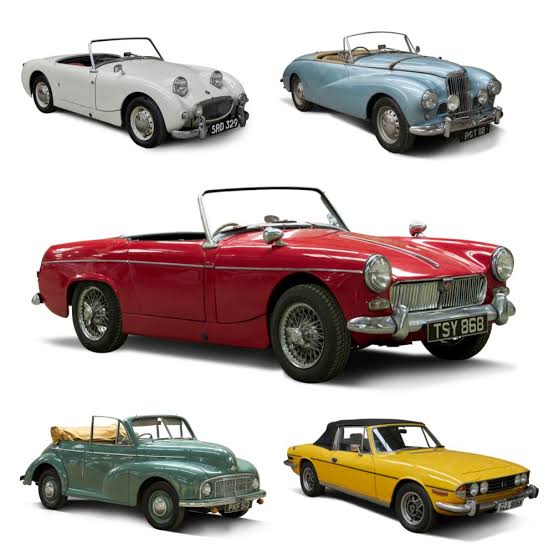
My aim is to offer good, usable classic cars, generally in the £3,000 to £10,000 price range. They're not necessarily show cars, but classics you can enjoy, drive and make part of your life. These are the kinds of cars I look for myself, well-maintained, usable classics that represent genuine value. Many of these have reached a point where, if bought carefully, they can provide years of enjoyable motoring. You don't always need to spend a fortune to own an interesting classic. The key is buying the right car. A tidy, usable solid car that is free from major problems is often a much better starting point than a cheaper project that can require more experience, time and money. Some cars may only need a good check over, a service, some minor repairs or light cosmetic work. Others may need more attention, and I'll always tell you as much as I know about a car. However, like any classic car, there may be things that only come to light with time and use. Similar Cars, Different Prices. It is quite common to see the same make and model advertised at very different prices. There is usually a reason for this. One car may have been well maintained, regularly serviced, kept dry and already had much of the important work carried out. Another may look similar but need mechanical repairs, welding, interior work or ongoing attention. For an experienced buyer, a cheaper car can sometimes be a rewarding purchase. However, if you're new to classic cars, buying the cheapest example available is not always the best option. A good, usable car that only requires some tinkering, routine maintenance and the occasional improvement will often provide far more enjoyment than a bargain that turns into a bigger project than you expected. The most important thing is understanding what you want from a classic car. Are you looking for something ready to enjoy on sunny weekends? A car you can tinker with? Your first classic? Or perhaps something you can gradually improve over time? Tell me your hopes, your level of experience and what you plan to do with the car, and I'll do my best to guide you towards something that suits both you and your budget. Buying a classic car should be enjoyable. If I can help you find the right one from the start, there's every chance you'll spend more time driving it than repairing it.